
In the world of luxury packaging, the “hand feel” of a box is just as important as the visual design. At Huzhou Aopa Industry Co., Ltd, we maintain our own greyboard testing lab to ensure every batch meets the specified GSM before production begins—because board quality directly determines box integrity. When a customer picks up a high-end gift box, they expect a certain level of sturdiness, weight, and “heft.” This structural integrity is almost entirely determined by the
Rigid Box Greyboard GSM Guide: What You Need to Know
This rigid box greyboard GSM guide explains how board thickness determines box sturdiness, weight, and wrapping quality. Greyboard GSM (grams per square meter) directly correlates with thickness—higher GSM means stiffer, more rigid construction. Our rigid box greyboard GSM guide covers the critical GSM ranges: 800-1200 for small jewelry boxes, 1200-1600 for medium cosmetic and gift boxes, and 1600-2000+ for large display packaging. Choosing the right greyboard GSM per this guide prevents warped boxes, poor wrapping, and excessive shipping weight.
Further Reading: TAPPI Standards — paperboard GSM and thickness measurement methods
Key Takeaways about rigid box greyboard GSM guide: Understanding rigid box greyboard GSM guide is essential for making informed B2B packaging decisions. Whether you are evaluating rigid box greyboard GSM guide options for the first time or optimizing your current rigid box greyboard GSM guide strategy, the right choice impacts your brand perception, cost structure, and market access.
Huzhou Aopa Industry Co., Ltd, with 18 years of experience in custom rigid box manufacturing, has seen how the wrong choice of board thickness can lead to warped boxes, damaged products, or a “cheap” brand perception. This guide will walk you through everything you need to know about selecting the perfect greyboard GSM for your custom packaging.
What is Greyboard and Why Does GSM Matter in Rigid Packaging?
Greyboard is a thick, recycled paperboard that serves as the internal skeleton for rigid boxes. Unlike folding cartons (which are made from a single layer of cardstock), a rigid box is constructed by taking a thick piece of greyboard, die-cutting it, and then “wrapping” it with a thinner, decorative paper.
GSM stands for “Grams per Square Meter.” In the paper industry, it is the standard measurement for weight. However, for rigid boxes, we often use GSM and thickness (measured in millimeters or points) interchangeably. The higher the GSM, the thicker and stiffer the board will be.
Choosing the right GSM is a balancing act. If the board is too thin, the box will feel flimsy and may bow under the weight of the product. If it is too thick, the box becomes unnecessarily heavy (increasing shipping costs) and can be more difficult to wrap cleanly, potentially leading to bulky corners.
How Does GSM Translate to Millimeters (Thickness)?
Because greyboard can vary in density depending on the manufacturer, the conversion from GSM to millimeters (mm) isn’t always 1:1. However, for most high-quality Chinese factories like Aopa Packaging, the following comparison is a reliable industry standard:
- 600 GSM: ~1.0 mm thickness
- 800 GSM: ~1.2 mm thickness
- 1000 GSM: ~1.5 mm thickness
- 1200 GSM: ~1.8 mm – 2.0 mm thickness
- 1400 GSM: ~2.2 mm – 2.5 mm thickness
- 1800+ GSM: 3.0 mm and above
When performing a rigid box greyboard GSM comparison, it is important to remember that the “wrap paper” (the outer decorative layer) usually adds another 0.1mm to 0.3mm to the final wall thickness.
Which GSM Should You Choose for Small Jewelry Boxes?
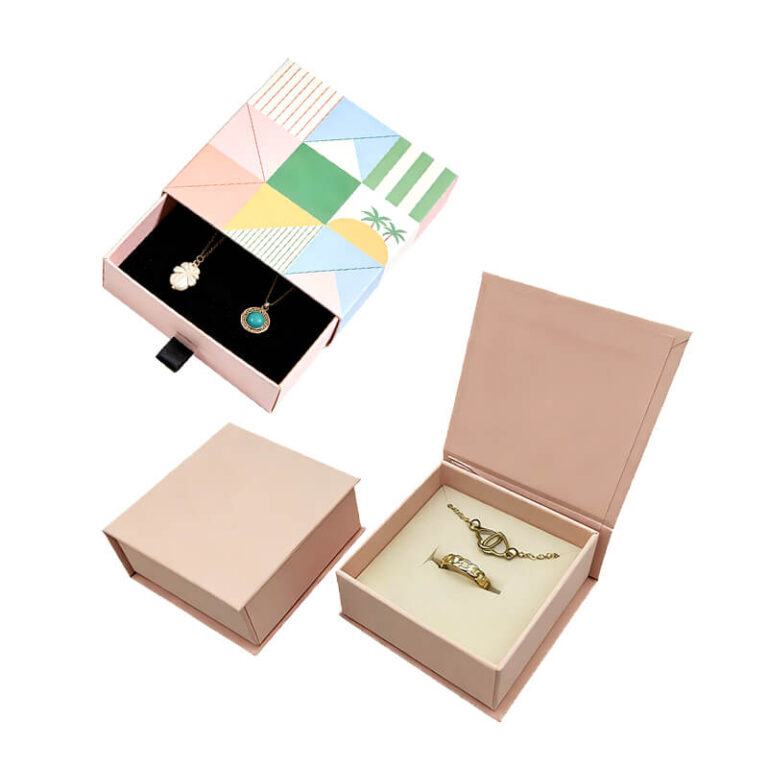
Small boxes, such as cotton filled jewelry boxes or small drawer boxes, do not require massive structural support. In fact, using a board that is too thick for a small box can make the proportions look awkward.
For boxes where the longest dimension is under 10cm:
- Recommended: 800 GSM to 1000 GSM (1.2mm – 1.5mm).
- Why: This provides enough rigidity to protect delicate jewelry without making the box feel like a brick. It also allows for very sharp, clean “V-slots” (the grooves cut into the board to allow it to fold into a 90-degree angle).
What is the Ideal Board Thickness for Large Magnetic Folding Boxes?
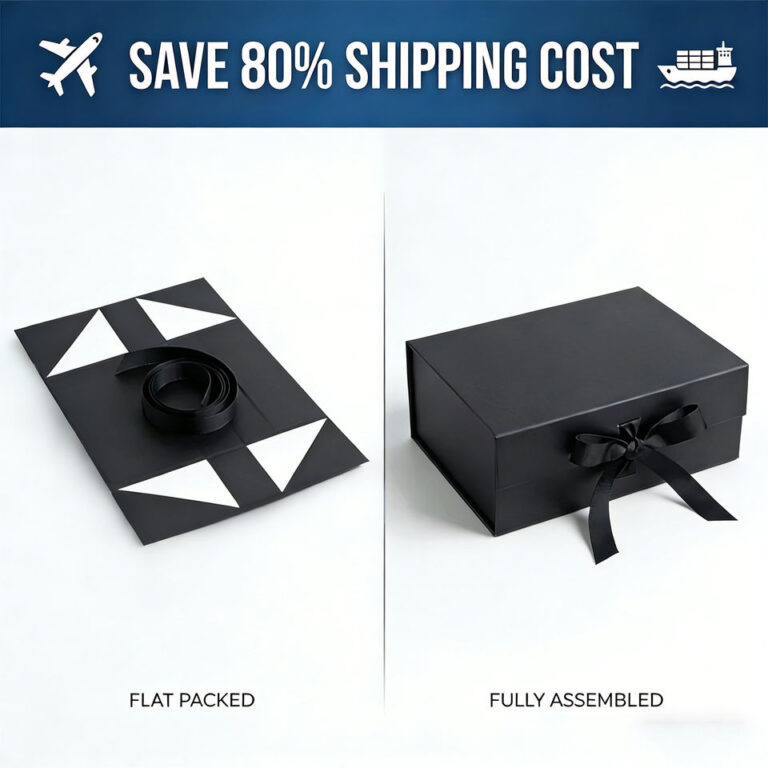
Magnetic folding boxes are a specialty of Aopa Industry. Because these boxes arrive flat and “snap” into shape, they rely heavily on the board’s structural memory and weight.
For a medium to large magnetic box (e.g., for apparel, luxury shoes, or gourmet food hampers):
- Recommended: 1200 GSM to 1400 GSM (2.0mm – 2.2mm).
- Why: Large surface areas are prone to “warping” if the board is too thin. A 1200 GSM board ensures the panels remain perfectly flat and the magnets have a solid surface to pull against, ensuring a satisfying “click” when the box is closed.
How Does Greyboard Quality Affect the Wrapping Process?
Not all greyboards are created equal. High-density greyboard provides a smoother surface for the wrap paper. If you use a low-quality, low-density board, the “grain” of the recycled fibers might show through the paper, especially if you are using a thin white wrap or a glossy finish.
At Aopa, we use FSC-certified, high-density greyboard. This ensures that when we produce lid and base boxes, the edges are crisp and the surfaces are flawlessly smooth. High-density board also absorbs less glue, preventing the wrap paper from bubbling or wrinkling during the lamination process.
Rigid Box Greyboard GSM Comparison Table
Environmental Impact: Is Higher GSM Less Sustainable?
As an FSC-certified manufacturer, Aopa Packaging is often asked about the environmental footprint of heavy greyboard. Greyboard is inherently eco-friendly because it is made from 100% recycled paper pulp. However, a higher GSM means more material usage and higher carbon emissions during transport due to weight.
If sustainability is your primary goal, we recommend choosing the *lowest* GSM that still provides the necessary protection for your product. We can help you test different thicknesses to find the “sweet spot” where protection meets efficiency.
Conclusion: Expertise in Custom Rigid Box Engineering
Choosing the right material for your custom packaging isn’t just about picking a number from a list. It’s about engineering a solution that protects your product, delights your customer, and respects your budget.
Whether you need a delicate 800 GSM jewelry box or a heavy-duty 1800 GSM luxury hamper, Aopa Packaging provides the technical expertise and manufacturing precision to bring your vision to life. With 18 years of experience and a state-of-the-art facility in China, we are your partner in high-end rigid box production.
Ready to start your project? Contact Huzhou Aopa Packaging today for a material consultation and a free quote on your custom rigid box requirements. 18 years of factory expertise, FSC certified, MOQ from 100 pcs.
Frequently Asked Questions
What greyboard GSM should I choose for my rigid box?
The rigid box greyboard GSM guide recommends: 1200–1500 GSM for lightweight products (jewelry, cosmetics), 1500–2000 GSM for medium-weight items (electronics, spirits), and 2000–2500 GSM for heavy products (wine bottles, tool sets). Higher GSM means greater structural rigidity.
How does greyboard GSM affect rigid box pricing?
Greyboard GSM directly impacts material cost—higher GSM means heavier board and higher price per unit. In the rigid box greyboard GSM guide, 1200 GSM greyboard costs approximately $0.08–$0.12 per box, while 2500 GSM costs $0.15–$0.22 per box (depending on size).
Can I mix different greyboard GSM within one rigid box?
Yes. The rigid box greyboard GSM guide allows using heavier GSM (2000+) for the base tray and lighter GSM (1200–1500) for the lid. This hybrid approach reduces cost while maintaining structural integrity where it matters most. Explore our lid and base gift boxes for your next project.